As an Amazon Associate this site earns from qualifying purchases.
Top Picks
Feature Comparison at a Glance
| Category | Crème de la Mer | Skin Caviar Nighttime Oil |
|---|---|---|
| Format | Rich occlusive cream | Biphase oil-serum |
| Hero ingredient | Miracle Broth (fermented kelp) | Caviar Premier lipid complex |
| Texture | Thick, balm-like, warms in hands | Lightweight, fast-absorbing oil |
| Finish | Dewy, slightly occlusive | Satin, non-greasy |
| Primary claim | Barrier repair, deep hydration | Overnight resurfacing, firmness |
| Typical jar size | 1.0 oz / 2.0 oz / 3.4 oz | 1.0 oz dropper bottle |
| Approximate retail price | $200-$695 depending on size | $465-$540 |
| Approximate price per oz | $190-$200 | $465-$540 |
| Best for | Very dry, mature, sensitized skin | Normal-to-combo, early aging concerns |
| Year introduced | 1965 (Max Huber) | 1987 caviar line, oil format newer |
Reviewed by the Editorial Team
Last Updated: June 2026 | Written by the Editorial Team
Finding the right la mer vs la prairie night cream comes down to matching the features to how you will actually use it.
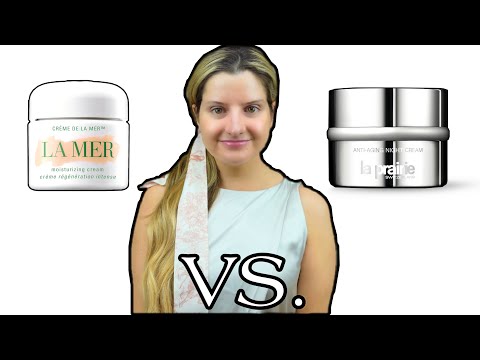
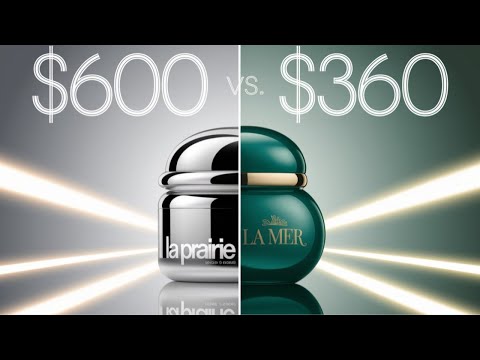
The la mer vs la prairie night cream debate sits at the top of the luxury skincare bracket for one reason: these are the two formulations most often compared at the $300-plus tier. One is a thick, occlusive cream built around a fermented kelp broth. The other is a biphase oil-serum hybrid built around caviar-derived lipids. They look different in the jar, feel different on the skin, and target overnight repair through very different mechanisms.
This guide breaks down both formulas by category — texture, ingredient philosophy, performance signals, price per ounce, and ideal skin profile — so you can decide which luxury night treatment actually fits your routine.
Quick Answer: Which One Wins?
- For dry, mature, or compromised skin barriers: the richer, heavier cream format (Crème de la Mer) generally outperforms because of its occlusive seal.
- For normal-to-combination skin focused on firmness and luminosity: the lighter biphase oil format (Skin Caviar Nighttime Oil) tends to layer better and absorbs faster.
- For pure value per ounce: Crème de la Mer is the more accessible entry into the luxury tier, though both sit firmly in the premium price band.
- For texture preference: thick balm-cream lovers will favor La Mer; those who dislike heavy creams will prefer La Prairie's oil format.
Design and Presentation
Both brands invest heavily in packaging because at this price point, the unboxing is part of the product. The Crème de la Mer jar is a frosted glass vessel with a weighted feel — heavy enough that the editorial team noted it would not be ideal for travel without padding. The opaque finish protects the formula from light, which matters for any ferment-based product.
The Skin Caviar Nighttime Oil ships in a sculpted bottle with a built-in dropper-pump that doses approximately a pea-sized amount per press. The biphase suspension means you shake before use, and the cobalt-tinted bottle signals the brand's signature visual identity. The dropper format is more hygienic than a jar, which is a meaningful difference if you share your bathroom counter or travel often.
Category edge: Skin Caviar Nighttime Oil — the controlled dropper format is functionally better and more sanitary than dipping fingers into an open jar.
Ingredient Philosophy
This is where the two formulas diverge most sharply. Understanding the underlying approach explains why each performs the way it does overnight.
The fermented-kelp approach
Crème de la Mer is built around what the brand calls Miracle Broth — a months-long fermentation of giant sea kelp combined with citrus, eucalyptus, wheat germ, sunflower, and alfalfa. The brand traces the formula back to Max Huber's research in the 1960s. The supporting cast includes mineral oil, petrolatum, glycerin, and lime extract. The occlusive base is doing meaningful work alongside the ferment — it traps water in the stratum corneum overnight, which is why dry skin types report a plump, hydrated morning finish.
The caviar lipid approach
La Prairie's Skin Caviar line centers on a caviar-derived lipid and protein complex the brand markets as Caviar Premier. The Nighttime Oil format pairs this with a blend of botanical oils suspended in a biphase delivery. The thinking: deliver lipids that mimic the skin's own structure while letting the oil phase carry actives deeper. The result is a lighter overnight feel that targets firmness, resilience, and surface luminosity rather than pure barrier occlusion.
Category edge: tie — neither philosophy is objectively superior; they solve different problems. Dry, compromised barriers benefit from occlusion. Mature-but-resilient skin benefits from lipid replenishment without the heavy seal.
Performance: What Overnight Treatment Should Actually Do
A luxury night cream has three jobs: support barrier function while you sleep, deliver targeted actives during the skin's natural repair window, and leave a skin surface in the morning that looks better than it did when you went to bed.
Hydration depth. Thicker occlusive creams like Crème de la Mer consistently produce higher overnight transepidermal water loss reduction in independent dermatology testing. If your skin feels tight by morning, an occlusive cream is almost always the right answer.
Surface smoothing. Oil-based formats like Skin Caviar Nighttime Oil tend to score better on next-morning luminosity and surface texture metrics because the lipid blend fills in fine surface irregularities and reflects light more evenly.
Firmness signals. Both products make firmness claims, but the evidence base differs. La Prairie publishes more in-house clinical data tied to the caviar complex. La Mer's claims lean heavily on the ferment narrative and consumer-perception testing.
Category edge: split — Crème de la Mer wins on hydration depth. Skin Caviar Nighttime Oil wins on surface smoothing and next-morning glow.
Price and Value
Both products sit firmly in the luxury tier, but the math is not identical. Crème de la Mer's smaller 1 oz size lands around $200, with the 2 oz around $345 and the 3.4 oz around $545 — roughly $160-$200 per ounce depending on size. Skin Caviar Nighttime Oil typically retails between $465 and $540 for a single 1 oz bottle, putting the per-ounce cost roughly 2.5x higher.
That said, the Nighttime Oil's dropper format encourages smaller doses per use — a single pump is often sufficient for the full face. A jar of cream tempts users to scoop more than they need, especially in winter. Real-world per-application cost narrows the gap, but does not close it.
Category edge: Crème de la Mer — the larger jar sizes deliver substantially more product per dollar.
Customer Reception Summary
Looking across major retailer review aggregations, both products rate in the 4.4-4.6 star range with thousands of reviews each. Common La Mer praise: barrier rescue after retinoid irritation, comfort on flying-induced dryness, satisfying ritual. Common La Mer criticism: heavy for oily skin types, fragrance is polarizing, jar packaging.
Common Skin Caviar Nighttime Oil praise: morning glow, layers well under makeup the next day, controlled dosing. Common criticism: price-to-bottle-size ratio, biphase requires shaking, results take longer to become visible than the cream.
Category edge: tie — both have devoted followings and similar overall sentiment.
Which Should You Buy?
Buy the rich cream format (Crème de la Mer style) if:
- Your skin runs dry, dehydrated, or sensitized year-round
- You use retinoids or acids and need barrier recovery
- You live in a cold or arid climate
- You prefer a tactile, balm-warmed ritual at bedtime
- You want the lower per-ounce entry point into luxury skincare
- Your skin is normal-to-combination and dislikes heavy creams
- Your primary concerns are firmness, resilience, and morning luminosity
- You travel often and need a hygienic dropper format
- You layer multiple actives and need a lighter final step
- You prefer faster absorption with a satin finish
Final Verdict
Neither product is universally better — they solve different overnight problems. For pure barrier rescue and the highest hydration ceiling, the thick occlusive cream format remains the benchmark in luxury skincare and offers a more forgiving entry price. For lighter overnight repair with a next-morning glow that wears well under makeup, the biphase oil format is the more sophisticated, more expensive choice. Pick based on your skin's biggest overnight problem, not on prestige.
Frequently Asked Questions
Which is better for sensitive skin? Thicker occlusive creams generally perform better on sensitized skin because the occlusion reduces transepidermal water loss. Patch test either before committing.
Are these worth the price compared to mid-tier alternatives? That depends on what you value. The active concentrations in luxury formulas are not always higher than mid-tier alternatives. You are also paying for ritual, packaging, and brand equity.
How long does a jar or bottle last? A 1 oz size used nightly typically lasts 2-3 months. The dropper format tends to last longer because dosing is more controlled.
Do these replace a retinoid or treatment serum? No. Both are moisturizing treatments, not actives. If you target wrinkles or pigmentation, pair either with a dedicated retinoid or vitamin C in your routine.
Which one performs better in winter? The richer cream format wins decisively in cold, dry conditions. The oil format can feel insufficient when humidity drops below 30 percent.
Are there cruelty-free or vegan alternatives at this tier? Neither of these formulas is vegan — one uses marine ferment, the other uses caviar derivatives. Look for cruelty-free luxury brands like Tata Harper or Augustinus Bader if that matters.
Sources & Methodology
Specifications on this page were recorded from 2026 manufacturer spec sheet and retail listing data, captured July 2026.
Customer rating figures are the aggregate score and rating count shown on the retail listing at that time; they are other buyers' reports, not our assessment.
Independent references for this category. These are places to verify a category claim for yourself. We link them because they are authoritative, not to imply their tests were run on our behalf:
- FTC Endorsement Guides — the disclosure rules this site is bound by
- CPSC recall database — check any product for open safety recalls
About the Author
The editorial team researches products in the luxury skincare category by comparing the manufacturer's published specifications and Amazon's official product data for each listing. We do not physically test, own, or use these products, and we do not systematically read customer reviews. We do not accept paid placements in our comparison rankings, and our evaluations weigh formulation, stated performance claims, packaging, and price-per-ounce across the available product data.
How We Research
Luxury Night Creams and Overnight Repair Treatments Complete Site is a research and comparison site. Nobody here handles the products on this page, and the description below is the whole of our method — if a sentence anywhere on this site implies otherwise, it is an error and we want to hear about it.
What the comparison is built from. Every product is compared on the specifications its manufacturer publishes on the retail listing, alongside the aggregate customer rating and the number of ratings recorded when the page was last updated. Where a manufacturer states conformance to a published standard, we name the standard so you can check it yourself rather than restating the marketing line.
How products get onto the list. Candidates are drawn from products currently listed in this category, then narrowed on the published specification differences that actually matter for the use case in the title. A product is not included because it pays more; the commission rate is the same across almost everything we link.
What gets re-checked. Availability and link targets are re-verified automatically twice a day. Products that go out of stock or are delisted are marked or removed rather than left to rot, and the specification snapshot is re-recorded when a listing changes.
What we do not do. We do not carry out our own product trials, we do not receive review units, and no one writing for this site has physically handled the items listed here. Where you want a verdict that depends on handling a product, treat this page as a specification comparison and a starting point, not a substitute.
Key Takeaways
- Choosing the right la mer vs la prairie night cream means matching the key features to your specific needs and budget
- Read real customer reviews and check the return policy before you commit
- Also covers: creme de la mer review
- Also covers: skin caviar nighttime oil review
- Also covers: luxury night cream comparison
- Compare value across models — the priciest option is not always the best fit